
Loose dentures can make everyday moments—sharing a meal, laughing with friends, or speaking in public—feel more stressful than they should. Denture adhesive may help temporarily, but many patients want a more dependable solution.
Snap-in dentures offer a middle ground between traditional removable dentures and a fixed full-arch implant bridge. They are removable for cleaning, yet they connect to dental implants for greater stability. For patients exploring snap-in dentures in Spring Hill, FL, understanding how the treatment works can make the decision feel much less overwhelming.
This article provides general educational information and is not a diagnosis or personalized treatment recommendation. A dental implant clinician should evaluate your oral health, medical history, and imaging before recommending treatment.
What Are Snap-In Dentures?
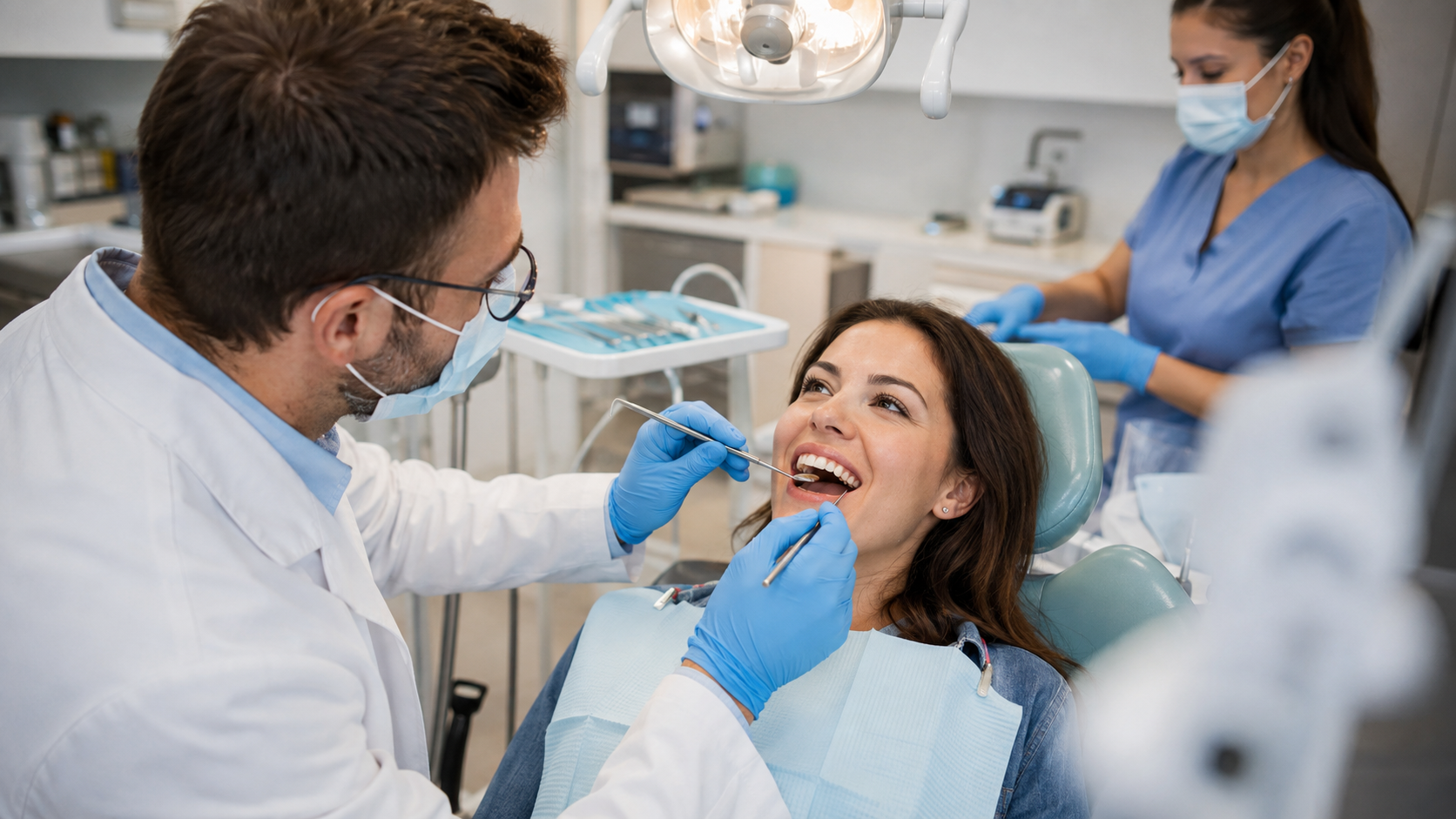
Snap-in dentures are removable dentures held in place by dental implants rather than relying only on suction or adhesive. They are also called implant-supported dentures, implant-retained dentures, or overdentures.
Small connectors on the underside of the denture line up with attachments placed on the implants. When the denture is seated, the components connect with a noticeable snap. The denture can still be removed at home for cleaning, but it should feel more secure during normal daily activities than a conventional removable denture.
The number and location of implants vary from patient to patient. Bone availability, bite forces, the condition of the gums, the shape of the jaw, and the planned denture design all affect the recommendation.
Snap-in does not mean fixed
The name sometimes creates confusion. A snap-in denture is stabilized by implants, but it remains removable. Most patients take it out each day to clean the denture, its attachments, and the gum tissue underneath.
A fixed full-arch restoration is different. That type of bridge attaches to implants and is generally removed only by a dental professional. Dental Implants of Spring Hill discusses both implant-supported dentures and full-mouth implant options, allowing patients to compare removable and fixed approaches based on their needs.
How Snap-In Dentures Compare With Traditional Dentures
Traditional dentures rest on the gums and depend on fit, suction, muscle control, and sometimes adhesive. They can work well for many people, but changes in the mouth may eventually lead to movement or sore areas.
Snap-in dentures gain additional retention from implants. This may reduce shifting and help the denture feel more dependable while chewing or speaking. However, they are not identical to natural teeth, and their performance depends on the health of the implants, the quality of the denture, the bite, and ongoing maintenance.
Potential advantages
- Improved stability: Implant attachments help resist lifting and side-to-side movement.
- Greater confidence: A more stable denture may help patients feel less concerned about movement during conversations and meals.
- Removable cleaning: Patients can take out the denture to clean around the implants and attachments.
- Less dependence on adhesive: Many patients find that implant retention reduces or eliminates their routine need for denture adhesive.
- A customized appearance: The denture can be designed to complement the patient’s smile, facial proportions, and preferences.
Important limitations
Snap-in dentures still require daily care and periodic professional maintenance. Their attachment inserts may wear and lose retention over time, and the denture may need adjustment, repair, or relining as the mouth changes.
Implant-supported dentures can also develop biological or mechanical complications. Published clinical research describes concerns such as inflammation around implants, loss of retention, loose components, fractures, and peri-implant disease. Regular examinations give the dental team an opportunity to identify changes early. More information is available in this clinical review of complications associated with implant-supported dentures.
Who May Be a Candidate?
Snap-in dentures may be considered for an adult who has lost most or all teeth in one arch, currently struggles with an unstable denture, or has teeth that cannot predictably be restored. Candidacy cannot be determined by symptoms or photographs alone.
A clinician generally evaluates:
- The quantity and quality of available jawbone
- Gum and oral tissue health
- The location of nerves and sinus spaces
- Bite alignment and chewing forces
- Current medications and medical conditions
- Tobacco or nicotine use
- The patient’s ability to maintain daily oral hygiene
- Expectations regarding removable versus fixed teeth
Some patients need preliminary care before implant placement. Depending on the individual, that may involve treatment for oral infection, removal of failing teeth, or a bone-related procedure. Other patients may be able to proceed without those steps. Imaging and an in-person examination are essential for planning.
What to Expect From the Treatment Process
1. Consultation and evaluation
The first visit focuses on listening as much as examining. Patients should be ready to discuss what bothers them about their current teeth or dentures, which foods are difficult to eat, their health history, and what they hope treatment will accomplish.
The dental team may examine the mouth, evaluate the bite, review three-dimensional imaging, and discuss whether a removable implant denture or fixed full-arch restoration better matches the patient’s goals.
2. Personalized treatment planning
No single design works for everyone. The plan should identify the proposed implant locations, denture type, need for preliminary procedures, anesthesia or comfort options, expected appointments, maintenance needs, and an itemized financial estimate.
This is also the right time to ask what happens if an implant does not integrate as expected, which services are included, and how future attachment replacement or denture repairs are handled.
3. Implant placement
During the surgical appointment, the implants are positioned in planned areas of the jaw. The exact experience depends on the complexity of the case and the comfort approach selected with the clinician.
A patient may receive a temporary denture or use an adjusted existing denture during part of treatment, but this varies. “Same-day” terminology does not necessarily mean that every patient receives the final restoration on the day implants are placed. Dental Implants of Spring Hill provides additional context about how same-day dental implant treatment can differ among patients and practices.
4. Healing and implant integration
Recovery includes several distinct phases. Early symptoms such as tenderness, swelling, or minor bruising occur around the surgical period and should gradually improve according to the clinician’s instructions. Soft-tissue healing refers to the gums closing and settling around the treated areas.
Osseointegration is a separate biological phase in which the jawbone forms a stable connection with the implant surfaces. It continues beyond the initial period of visible gum healing. The total timeline varies according to bone health, implant stability, surgical complexity, and individual healing.
Completion of treatment is another milestone. The final denture may be fitted only after the implants and tissues are ready, the bite can be evaluated, and the attachments can be positioned accurately. Early comfort, gum healing, implant integration, and delivery of the final restoration should not be treated as the same event.
5. Denture attachment and follow-up
Once the implants are ready, the denture is fitted to its attachments. The clinician checks how it seats, how the upper and lower teeth meet, and whether any area places unwanted pressure on the gums.
Follow-up visits allow the team to adjust the fit and monitor healing. Patients should report persistent pain, increasing swelling, drainage, fever, unusual movement, a bite that suddenly feels different, or an attachment that no longer holds as expected.
Caring for Snap-In Dentures and Implants
Implants cannot develop cavities, but the tissue around them can become inflamed. Consistent plaque removal is therefore essential.
Patients should follow their dental team’s specific instructions, which may include:
- Removing and cleaning the denture every day
- Brushing the denture with a product suitable for its material
- Cleaning around implant attachments with a soft brush or recommended aid
- Rinsing the denture before placing it back in the mouth
- Avoiding abrasive cleaners or very hot water that could damage the appliance
- Attending scheduled implant and denture maintenance visits
- Having worn attachment inserts replaced when retention decreases
Patients should never force a denture that no longer seats properly. Food debris, a damaged attachment, tissue changes, or denture wear may interfere with the fit. A dental professional can identify the cause without risking further damage.
How Much Do Snap-In Dentures Cost in Spring Hill, FL?
The cost of snap-in dentures in Spring Hill, FL, depends on the number of implants, whether treatment involves one or both arches, the denture materials, imaging, anesthesia, extractions, bone-related procedures, and temporary restorations. Maintenance and future replacement of attachment components should also be considered.
Because the phrase “implant dentures” can describe different treatments, advertised prices are not always direct comparisons. One estimate may cover only the denture, while another may include surgery, implants, attachments, imaging, and follow-up care.
Before making a decision, patients can ask for a written plan showing what is included, what may create an additional charge, available financing options, and which fees may apply later. Dental insurance benefits vary, so coverage should be verified for each part of treatment.
Frequently Asked Questions
Do snap-in dentures stay in all the time?
No. Snap-in dentures are designed to be removable. The dentist will explain when to remove them and whether they should remain out during sleep. Fixed full-arch teeth are a different implant option.
Can a patient eat normally with snap-in dentures?
Many patients choose snap-in dentures because they want more stability while eating. Even so, adaptation takes time, and food choices may need to be modified during healing. The final chewing experience depends on implant support, denture design, bite balance, and oral health.
Are snap-in dentures painful?
The surgical area may feel tender during early recovery, but comfort varies by patient and procedure. The clinician can explain anesthesia, postoperative care, and appropriate pain-management options. Severe, worsening, or persistent discomfort should be reported promptly.
Can existing dentures be converted into snap-in dentures?
Sometimes an existing denture can be modified, but not every appliance has the fit, strength, space, or design needed for implant attachments. An evaluation is necessary to determine whether conversion is reasonable or a new denture would provide a better result.
How long do snap-in dentures last?
There is no universal lifespan. The implants, attachment components, and denture are separate parts that may require different types of maintenance. Daily cleaning, regular professional care, bite forces, material wear, health conditions, and tobacco use can all influence longevity.
Are snap-in dentures better than fixed implant teeth?
Neither option is best for every patient. Snap-in dentures are removable and may be easier for some people to clean. Fixed full-arch teeth remain in place and may feel closer to natural teeth, but they involve different clinical, hygiene, and financial considerations. A personalized comparison is more useful than a one-size-fits-all answer.
Explore a More Stable Smile in Spring Hill, FL
Snap-in dentures can provide a reassuring option for patients who want greater stability without choosing a fixed full-arch restoration. The best starting point is a thorough consultation that explains candidacy, alternatives, expected maintenance, costs, and each phase of treatment in plain language.
Patients considering snap-in dentures in Spring Hill, FL, can contact Dental Implants of Spring Hill to ask questions and schedule a personalized evaluation. A conversation with the implant team can help clarify which solution fits the patient’s health, comfort preferences, daily routine, and smile goals.